Gyotaku
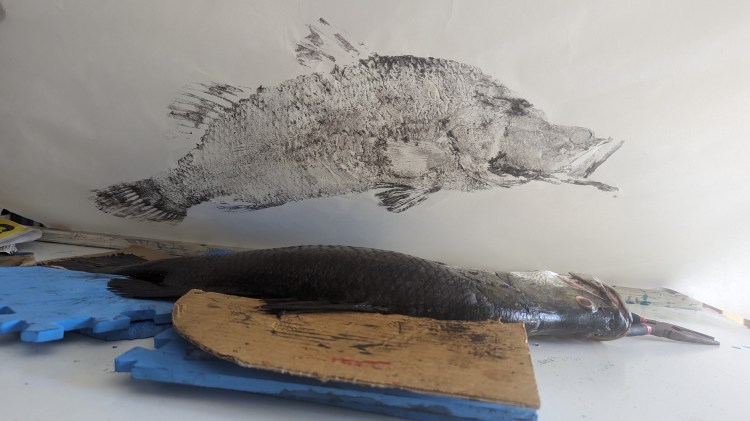
Gyotaku, which translates to “fish-rubbing” was developed in the mid 1800’s as a way for Japanese fishermen to record their catches before the development of the camera. Using only traditional non-toxic ink and rice paper, fishermen would paint their catches with Sumi ink before pressing paper over the fish to get an accurate recording of their catch, proving to their friends that it was actually “this big”. Over time this style of printing fish has developed into its own art form practiced around the world.
The Process
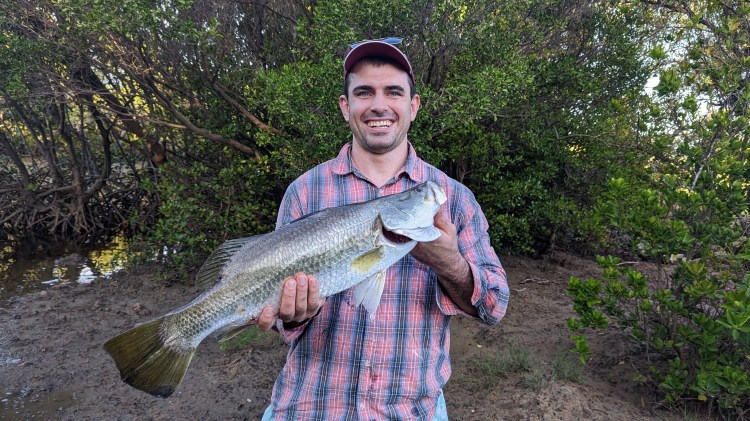
- Catch the Fish (often the toughest part)
- Paint the fish in non-toxic ink or paint
- Capture the impression of the fish on Washi paper (Rice Paper)
- Detail and shade the print
- Wet-mount two pieces of washi paper to flatten for framing
- Stamp and sign the piece ready to frame
- Enjoy your fish for dinner!

Wet Mounting
Also known traditionally as Uaunchi backing, it is a process that takes a number of days to complete and turns wrinkled or creased paper into a stiff farmable paper with a natural wave and texture to it. Washi paper as a craft is registered by UNESCO as having intangible cultural heritage to Japan. Handmade in a traditional manner, this flexible, durable and tough paper is made from a variety of natural fibers, often Mulberry bush, and has multiple uses from art, furniture to clothing. Its absorbent nature is particularly challenging to work with, as once the ink or paper has touched the paper it cannot be removed. “Like every swing of a sword, you cannot take back a single stroke of the brush”.
- 1. Using a homemade wheat paste, two pieces of washi paper are glued together on a flat surface, ensuring no air bubbles are between each layer
- 2. This is left to dry for 1-2 days in a cool environment
- 3. The two pieces of washi are then peeled off the flatsurface in a one satisfying pull
- 4. The now stiff paper is then ready to stamp and frame.

